The Top 5 Animals to See on an African Safari – And Why Each One Will Stay With You
There is a question we get asked more than almost any other when guests are planning their first African safari: “What animals will we actually see?“
It’s a fair question. Africa has 54 countries, ecosystems ranging from the Sahara to the Okavango Delta, coastlines, cloud forests, ancient savannahs that stretch further than the eye can comprehend. The wildlife list alone runs into thousands of species. So where do you even begin?
The truth is, every animal you encounter in the African bush carries its own weight. The lilac-breasted roller sitting on a thornbush. The dung beetle rolls its load across a dusty track. None of it is insignificant when you’re out there, genuinely in it. But there are five animals that tend to stop time. Five that guests talk about on the drive back to camp, and again at dinner, and then again years later when someone asks them about their favourite travel memory.
These are the five that, in our experience, change people.
1. The African Lion
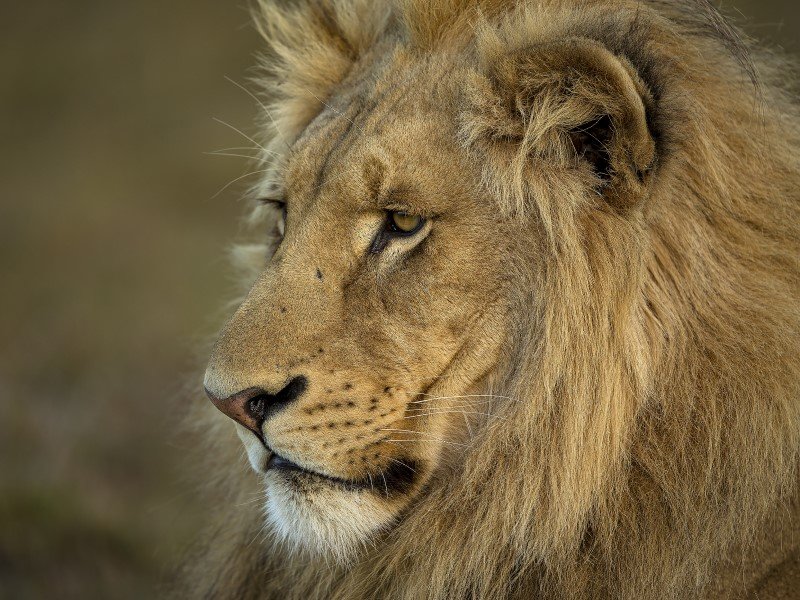
The lion is the reason many people decide to go on safari in the first place. And yet, nothing quite prepares you for the reality of one.
On paper, a lion at midday seems anticlimactic they sleep upwards of 20 hours a day, and more often than not, your first sighting will be of a pride draped across a flat rock or sprawled under an acacia tree in a tangle of paws and twitching tails. But stay with them. Watch. Because within that apparent stillness is a tension that never fully drops. A flick of the ear. A shift of the head. The way the whole pride moves as one organism when something a sound, a smell, a change in the wind catches their attention. A lion at rest is still, unmistakably, a predator.
Africa’s lion population has declined by roughly 43% over the last two decades. The Maasai Mara in Kenya and the Serengeti in Tanzania remain among the best places on the continent to observe them in numbers, within complex, thriving prides. In Botswana’s Okavango Delta, you’ll encounter lions who have learned to hunt in water, a behaviour so specific to this landscape that it feels like a glimpse into how animals actively reshape themselves to their world.
What lingers isn’t always the dramatic sighting. It’s often the sound of a roar carrying across the dark camp at 2am that reminds you, with a quiet jolt, exactly where you are.
2. The African Elephant
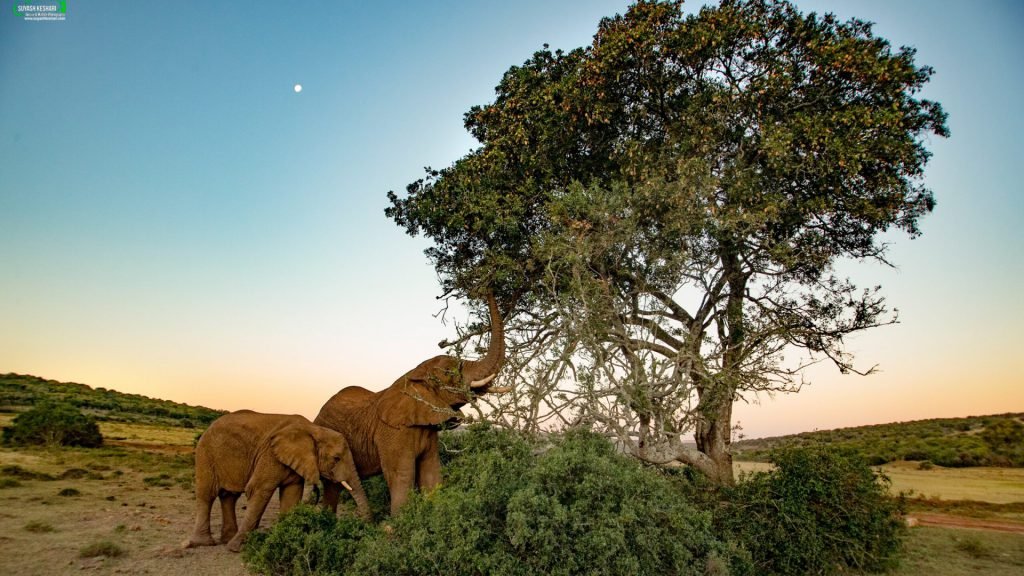
An elephant herd moving across open ground is one of the most quietly overwhelming things you’ll witness in nature. There’s a word in Swahili tembo and it carries with it something of what these animals actually are: ancient, dignified, impossible to reduce.
Elephants are the largest land animals on earth, and they carry that weight with a kind of unhurried authority that commands respect from every other creature in the ecosystem. Predators step aside. Other grazers give them room. The land itself bends to their presence; they are ecosystem engineers, digging waterholes in dry riverbeds, pushing over trees to create clearings, and dispersing seeds across hundreds of kilometres.
Watch a matriarch lead her herd and you are watching something that has been happening in Africa for millions of years: accumulated knowledge, passed down through generations, guiding a family across landscapes she has memorised over half a century of living.
Chobe National Park in Botswana holds one of the largest concentrations of elephants on earth. Amboseli National Park in Kenya offers the extraordinary juxtaposition of elephant herds moving below the snowcapped peak of Kilimanjaro. Both are on our Africa itineraries and both, without exception, produce moments that guests describe as among the most moving of their lives.
3. The Leopard
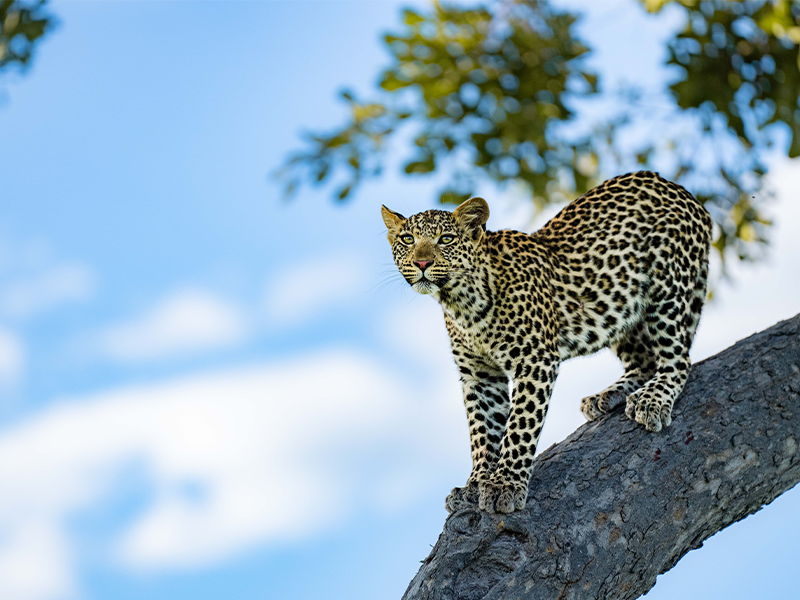
If the lion is the animal you hope to see, the leopard is the one you dream about. Solitary, nocturnal, and masterfully concealed, the leopard is the great test of patience on an African safari and the reward for that patience is singular.
A leopard sighting is almost always intimate. Not a pride of ten animals moving in the open, but a single cat threading through riverine bush, or stretched along a branch in the fig trees with the unhurried confidence of something that knows it will not be disturbed. Every leopard you see has found you before you found it. That realization lands differently in the field than it does reading it here.
They are astonishing athletes capable of hauling prey twice their body weight into the canopy of a tree to keep it from lions and hyenas. They are also, pound for pound, among the most adaptable of all Africa’s big cats, able to survive in habitats that would challenge most other carnivores.
The South Luangwa Valley in Zambia is often called the leopard capital of Africa and with good reason. The Maasai Mara, Kruger in South Africa, and the Serengeti all offer strong sighting opportunities. But no guide will promise you a leopard. That’s precisely what makes finding one feel like something the wilderness decided to give you.
4. The African Buffalo
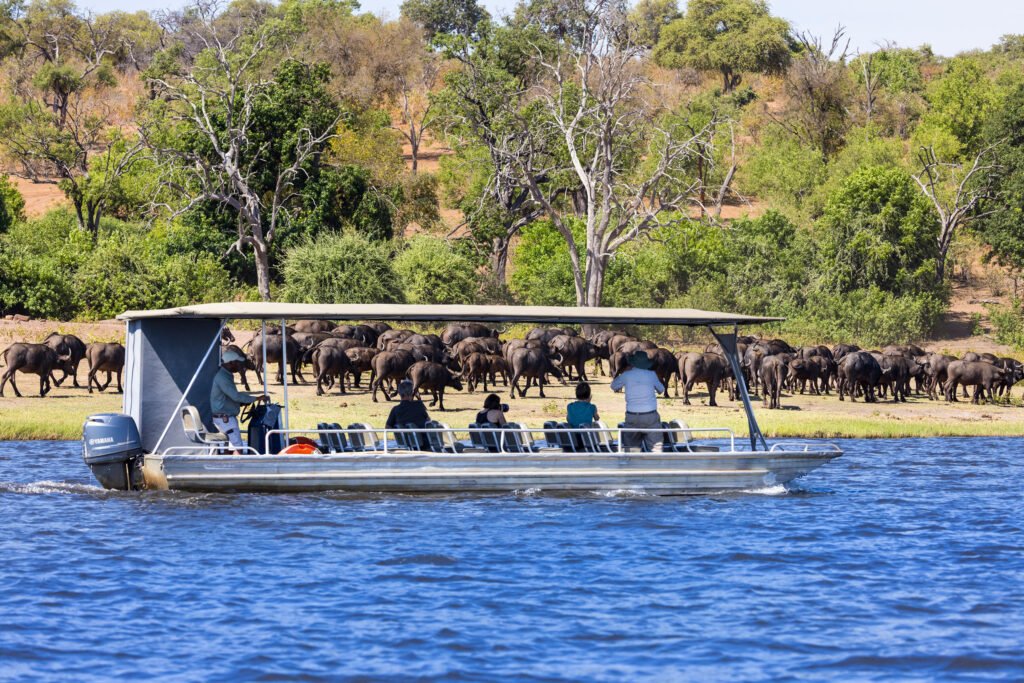
The buffalo is frequently underestimated by first-time safari guests, overshadowed on wishlists by the more cinematic big cats. This is a mistake.
Few animals in Africa command the attention of a seasoned guide quite like a buffalo does. Known as one of the most unpredictable animals on the continent, the African buffalo has never been successfully domesticated and there is something in the way it carries itself that makes this entirely believable. A bull buffalo regarding your vehicle from fifty metres away is not particularly concerned about you. That is not indifference. That is confidence.
In large herds and herds of a thousand or more are still possible in parts of Zambia and Tanzania there is a force to the buffalo’s presence that goes beyond individual animals. The ground moves. The dust rises. The sound alone is something your body registers before your mind catches up.
Beyond the spectacle, the buffalo is central to the drama of the African bush. Prides of lions organise entire strategies around buffalo hunts. Nile crocodiles wait at crossing points. The relationship between predator and prey, played out at this scale, is among the most compelling wildlife theatre Africa offers.
5. The Giraffe
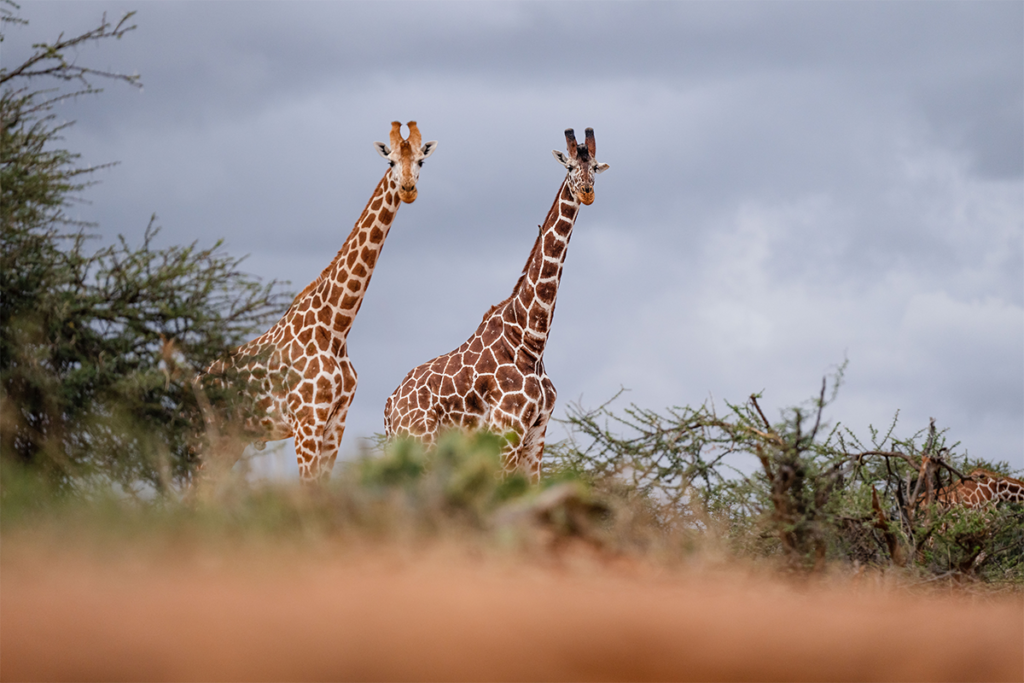
We saved the giraffe for last not because it’s the least remarkable, but because it is perhaps the most consistently underestimated and because it deserves its moment.
The giraffe is the tallest animal on earth, and in the open savannah, silhouetted against a burning East African sky, that height becomes something almost surreal. They move with a slow-motion grace that seems physics-defying, each stride covering ground in a way that makes the landscape feel smaller around them. Up close, their faces are extraordinary: long-lashed eyes that hold a quiet, unhurried intelligence, and a patience that seems to belong to a different kind of time altogether.
But the giraffe is also, quietly, in trouble. Giraffe populations across Africa have declined by nearly 40% over the past three decades, a crisis so underreported that conservation scientists have called it a “silent extinction.” Habitat loss, poaching, and human-wildlife conflict are pushing several subspecies toward increasingly fragile ground.
Seeing a giraffe on safari is never just a sighting. It is a reminder that the Africa we are privileged to witness is not guaranteed. That every game drive, every sunrise on the savannah, every moment of sitting in still silence while something extraordinary moves through the golden grass all of it is worth protecting.
A Note on the “Big Five”
You may have noticed that the traditional Big Five lion, leopard, elephant, buffalo, and rhino is not quite what this list reflects. The fifth spot belongs to the giraffe rather than the rhino, and that is a deliberate choice. Rhinos, particularly the black rhino, are critically endangered, and ethical encounters are increasingly rare. Where responsible rhino tracking or conservation experiences exist in certain private conservancies in Kenya, or through dedicated rhino sanctuary experiences we are proud to facilitate them thoughtfully. But chasing a sighting for the sake of a checklist has never been the Ameliya way.
Africa’s wildlife does not owe you a list. What it offers, when you approach it with patience and genuine curiosity, is something far richer than any checklist could hold.
Now that you know who you’re going to see, the next question is when. Read our honest breakdown of the best time to go on an African safari — by destination, season, and what you actually want from the trip.