


What Is the Great One-Horned Rhino?
The great one-horned rhinoceros, also known as the Indian rhinoceros, is one of the world’s largest rhino species. It’s native to the Indian subcontinent and is recognised by its single horn and distinctive grey-brown skin, which forms thick folds resembling armour. These folds give the animal its remarkable appearance, while its prehensile upper lip helps it feed on grasses, leaves and aquatic plants. Today, the species is found mainly in protected areas across India and Nepal, particularly in grasslands and riverine forests. Despite conservation gains, habitat loss and fragmentation remain important challenges for its long-term survival.
Why greater one-horned rhinos matter
The greater one-horned rhino plays an important role in the grassland and wetland ecosystems it inhabits. As a large herbivore, it feeds on grasses and other vegetation, helping shape plant communities and maintain habitat diversity. Its presence also reflects the health of these landscapes, which support many other species. These ecological roles benefit the wider ecosystem. The word “greater” distinguishes it from the smaller Javan and Sumatran rhinos.
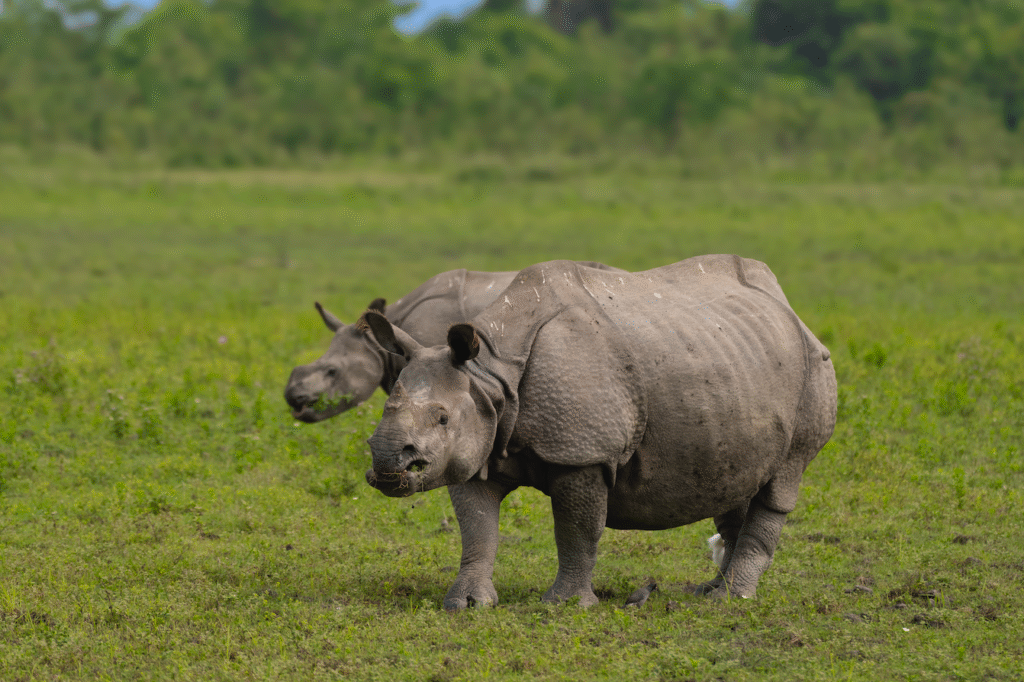
The Social Butterflies of the Rhino World
You might think of rhinos as solitary grumps, but our one-horned friends have a bit of a social streak! While they’re not exactly throwing rhino parties, they do have an interesting social structure:
- Generally solitary, but not antisocial: These rhinos are usually happy doing their own thing, but they’re not opposed to a bit of company now and then.
- Loose territories: Males have a “my space, but you can visit” policy. Their territories often overlap, and they’re not too fussed about defending them aggressively.
- Wallowing get-togethers: Picture a rhino spa day! They often meet up at mud wallows for a good soak and maybe a bit of gossip (I may have made that last part up).
Home Sweet Home: Habitat Preferences
One-horned rhinos are pretty particular about where they hang out. They’re like the real estate agents of the animal world, always looking for the perfect location:
- Alluvial grasslands: They love these flat, grassy areas near rivers. It’s like an all-you-can-eat buffet for them!
- Wetlands and swamps: These provide great wallowing spots and keep them cool.
- Riverine forests: A mix of trees and grass gives them both food and shelter.

Where to See the Indian One-Horned Rhino
- Kaziranga National Park, Assam: One of the finest places to see the great one-horned rhino, with extensive floodplains, grasslands and wetlands.
- Pobitora Wildlife Sanctuary, Assam: Known for its high density of one-horned rhinos, offering excellent opportunities for sightings.
- Orang National Park, Assam: A landscape of riverine forests, grasslands and wetlands that supports a healthy rhino population.
- Jaldapara National Park, West Bengal: Home to one-horned rhinos, with expansive grasslands and riverine habitats.
When Humans and Rhinos Collide
Unfortunately, our big gray friends are feeling the squeeze from human activities:
- Habitat loss: As we expand our cities and farms, rhinos are losing their homes.
- Poaching: The illegal wildlife trade continues to be a major threat.
- Human-wildlife conflict: When rhinos wander into farmlands (can you blame them? Those crops look delicious!), it can lead to tension with local communities that result in some stringent and illegal measures.

Indian One-Horned Rhino Population Today
The greater one-horned rhino population has made a remarkable recovery through decades of conservation and protection. According to the latest global estimate, published in 2025, there are approximately 4,075 individuals across India and Nepal. India is home to 3,323 rhinos, while Nepal has around 752. Within India, Assam holds the largest share, with Kaziranga National Park alone supporting more than 2,600 rhinos, according to figures reported in September 2026. Although these numbers reflect encouraging progress, habitat fragmentation, flooding and poaching remain concerns. Continued protection, habitat restoration and wildlife corridors are essential for securing the species’ future.
Conservation Strategies: Giving Rhinos a Fighting Chance
It’s not all doom and gloom though! There are some fantastic efforts underway to protect these living tanks:
- Protected areas: Places like Kaziranga National Park in India are rhino havens.
- Anti-poaching measures: From armed guards to high-tech surveillance, we’re pulling out all the stops.
- Community engagement: Involving local people in conservation efforts is key. After all, they’re the rhinos’ neighbors!
A Day in the Life of a One-Horned Rhino
Ever wondered what a rhino does all day? Well, let me paint you a picture:
- Early morning grazing: They start their day with a hearty breakfast of grass and leaves.
- Midday wallow: When the sun gets high, it’s time for a mud bath to cool off and protect their skin.
- Evening snack: As temperatures cool, they head out for another round of munching.
- Nighttime wanderings: They might take a leisurely stroll under the stars, because why not?
These rhinos have some pretty cool survival strategies too. Their thick skin isn’t just for show – it’s like built-in armor. And that horn? It’s not just for looks either. They use it for defense, digging for water, and breaking through dense vegetation.
So there you have it – the one-horned rhino in all its glory! These incredible animals have adapted to their environments in amazing ways, but they need our help to keep thriving. By understanding their behavior and needs, we can better protect them and ensure they’ll be around for generations to come. We ought to learn the art of coexistence.
Every time you support conservation efforts, you’re helping to write the next chapter in the one-horned rhino’s success story. So, are you ready to join Team Rhino? Embark on this Kaziranga Group Safari to understand them better and contribute towards their conservation.

Frequently Asked Questions
How many one-horned rhinos are left in the world?
According to the 2025 global estimate, approximately 4,075 greater one-horned rhinos remain in the wild, across India and Nepal. Their population has steadily recovered through conservation efforts.
Why is it called the one-horned rhino?
It is named after its distinctive single horn, which grows on its snout. Unlike African rhino species, which have two horns, this species has only one.
Is the Indian rhinoceros endangered?
The Indian rhinoceros, or greater one-horned rhino, is classified as Vulnerable according to the IUCN Red List. Habitat loss, fragmentation and poaching remain significant threats.
Which national park has the most one-horned rhinos?
Kaziranga National Park in Assam, India, has the world’s largest population of greater one-horned rhinos, with more than 2,600 individuals recorded in recent estimates.