


It’s one of the questions we get most often. Sometimes it’s asked directly “When is the best time to go on safari?” and sometimes it comes wrapped in a practical concern: school holidays, a milestone birthday, an anniversary falling in November.
The honest answer is that there isn’t one. There’s only the best time for what you want to see, where you’re going, and what kind of trip you have in mind.
Africa covers several different climate zones, and wildlife patterns vary considerably depending on where you are. What we can do is give you a clear picture of each destination so you can make the choice that suits your safari, not a generalisation written for everyone.
Understand the Two Seasons First
Most of sub-Saharan Africa operates on two broad rhythms: the dry season and the green season.
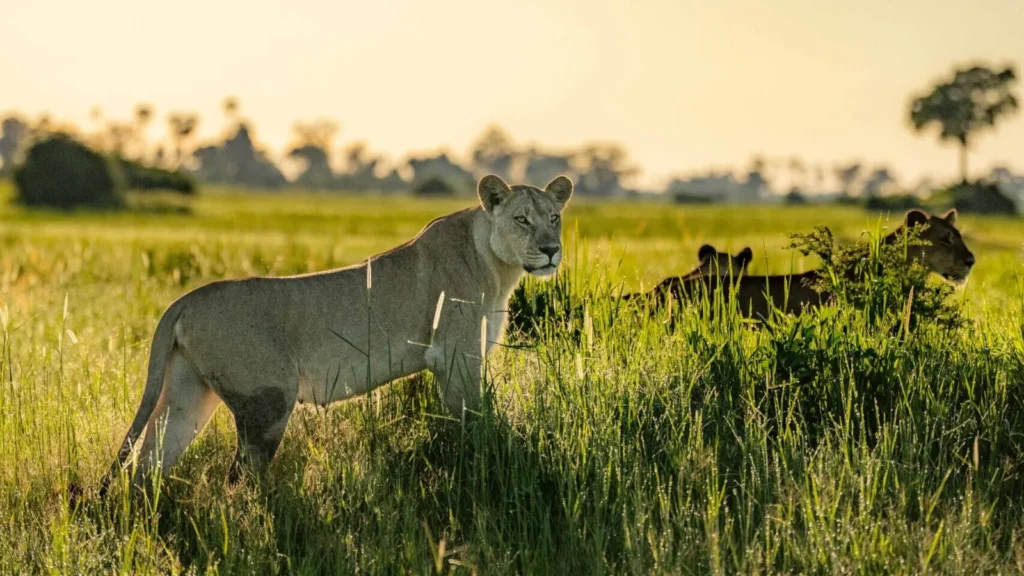
The dry season runs roughly June through October. Vegetation thins, water concentrates at predictable points, and wildlife follows. Game viewing is at its most consistent, animals are easier to spot, predator activity intensifies, and the bush has an open, cinematic quality. Peak season for a reason.
The green season runs November through April. The rains bring the savannah back to vivid life for newborns, migratory birds, and landscapes that look nothing like the Africa most people imagine. Quieter. Less expensive. And in the hands of a good guide, genuinely extraordinary.
Neither is better. They are simply different experiences of the same remarkable place.
East Africa – Kenya and Tanzania
June to October is when the Maasai Mara performs at full volume. The Great Wildebeest Migration reaches its peak between July and September, when enormous herds cross the Mara River in the face of waiting Nile crocodiles. If this is on your list and it should be August typically offers the most concentrated crossings. Beyond the migration, predator sightings across the Serengeti and Amboseli are outstanding.
November to March is genuinely underrated. December through February sees crowds thin, rates drop, and the landscape soften. Wildebeest calves appear in the southern Serengeti from January onward, triggering relentless predator activity. Migratory birds arrive from Europe and Asia. It’s one of our favourite windows to recommend East Africa, and most guests are surprised by how much it delivers.
Southern Africa- Botswana, Zambia, South Africa
May to October is peak season, and the game viewing is arguably the finest on the continent. Botswana’s Okavango Delta floods paradoxically during the dry season, drawing extraordinary concentrations of wildlife into the Moremi concessions. Chobe’s elephant herds peak from August through October. In Zambia, the dry season opens up South Luangwa for walking safaris, low vegetation, animals concentrated near the river, and the experience of being on foot in genuine wilderness as compelling as this kind of travel gets.
November through April in Southern Africa is more rewarding than its reputation suggests. The Okavango in the early green season is lush and rich with birdlife. For those combining a Big Five safari with Cape Town, November through February is ideal timing for the Western Cape.
Uganda and Rwanda – Gorilla Trekking
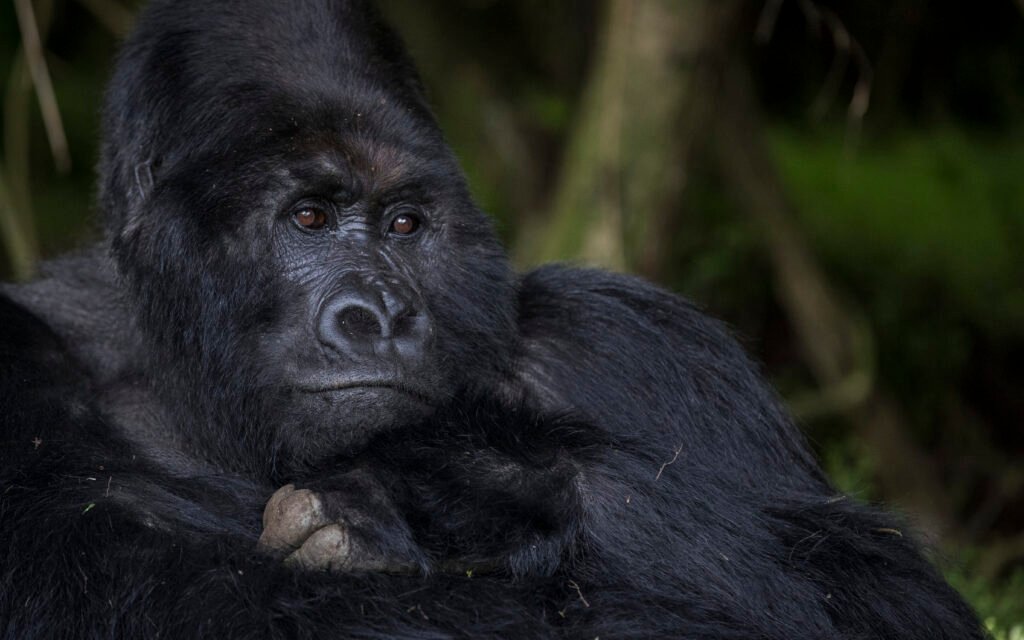
Gorilla trekking is possible year-round, but the dry windows June to September and December to February offer the most manageable trekking conditions. The trails climb steep, heavily forested terrain, and reaching the gorillas through heavy rain and deep mud is a considerably different proposition than a dry-season trek. Permits, not season, are the real limiting factor. If your dates are fixed, we’ll always advise honestly on what to expect.
A Few Things Worth Knowing
Shoulder season is underrated. May and November are among our favourite months across much of Africa. The crowds are thinning, rates haven’t peaked, and the bush carries an energy that the deep dry season can sometimes flatten.
School holidays fill camps fast. July and August sit directly in peak season. If your dates are school-term dependent, booking twelve to eighteen months ahead is not excessive for the most sought-after camps.
The weather is less predictable than it used to be. Climate patterns across Africa are shifting. This is all the more reason to travel with people who have current, ground-level knowledge, not just what the seasonal averages suggest.
The best month for your African safari is the one that aligns with the experience you’re actually after. Working that out properly, honestly is one of our favourite conversations to have.
Still wondering what a great safari actually feels like on the ground? Read what happened when we spent a week with lions, cheetahs, and a leopard in Kenya’s Naboisho Conservancy — and why it’s one of the finest big cat destinations in Africa.

slot365 vip có giao diện dễ dùng, kể cả người mới cũng thao tác được nhanh chóng. TONY06-18
Điều khiến mình quay lại cricfy tv apk là ít gặp tình trạng lag khi chơi lâu. TONY08-10